
History of JLGS
A century of women leading, serving, and strengthening Greater Springfield.
From early volunteer work at the Springfield Day Nursery to literacy, scholarships, advocacy, and community partnerships, the Junior League of Greater Springfield has spent more than 100 years turning leadership into action. Admitted to the Association of Junior Leagues in 1922 as the 53rd Junior League in the United States, JLGS has continually evolved to meet the needs of the community.
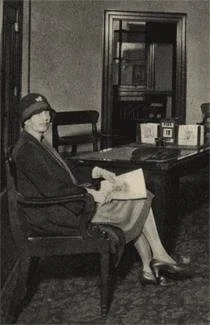
First JLGS President
Mrs. Kenneth Page
The Junior League of Springfield Day Nursery was organized, and volunteers led classes in storytelling, cooking, sewing, and dancing while raising funds for improvements and equipment through rummage sales, card parties, and dances.

1914 | Early Service Begins
The Association of the Junior Leagues of America was founded, and the Springfield League applied for membership.
1921 | Joining a National Movement
The Springfield League was admitted to AJLA on January 25, 1922. In these early years, JLGS expanded beyond the Day Nursery, supported Wesson Maternity Hospital, opened a Salvage Shop, sponsored children’s plays, opened pre-school and pre-natal dental clinics, organized a Speakers Bureau, and hosted ambitious fundraising events.
1922–1930 | Officially Established
During the 1930s, the League supported maternal health, public health nutrition, the Child Guidance Clinic, Springfield Girls Club, and Red Cross disaster relief after the 1936 flood. It also established a placement bureau, a musical scholarship fund, and volunteer training in social case work.
1930s | Expanding Community Reach
During World War II, the League concentrated more heavily on volunteer service, supported the U.S.O., contributed to the Springfield Symphony Orchestra, reopened and reimagined thrift and consignment efforts, and marked its 25th anniversary in 1947. The first Follies fundraiser followed in 1949.
1940s | Wartime Service and Civic Leadership
The League formed a puppetry committee, developed the Budget Box, and founded “The Junior Workshop,” a preschool for children with disabilities that later merged into the Springfield Day Nursery. That work earned recognition from United Cerebral Palsy in 1955.
1950s | Building Lasting Institutions
JLGS continued signature fundraising through Follies and concert series, launched the Community Directory, established League headquarters, and supported tutoring and enrichment for children in low-income areas. In 1968, members also voted to give $3,000 to the Black community as a demonstration of trust and cooperation.
1960s | Growing Programs and Public Presence
1970s | Advocacy, Access, and Innovation
The League broadened its civic footprint through public affairs and community planning, launched daycare initiatives for abused and neglected children, supported infant-toddler centers, contributed to the Springfield Science Museum’s Touch and See Exhibit, funded Gateway School, supported Riverfront planning, and came under the Connable Bill in 1976 to enable lobbying.
JLGS adopted position statements on children, volunteerism, teenage pregnancy, arts, human rights, civic awareness, and the environment. It launched Project LEAD, co-sponsored candidates’ forums with the League of Women Voters, advocated for the Children’s Trust Fund, and helped form the coalition that established the Ronald McDonald House in Springfield with a $50,000 pledge.
1980s | A Stronger Advocacy Voice
The League sponsored the first gala benefiting Ronald McDonald House in 1990, celebrated the House opening in 1991, established the Sustainer of the Year Award in 1992, supported CASA and youth volunteer recognition, and shifted its focus area to youth and later to women and children. In 1998, JLGS adopted Prospect House Shelter as its signature project, and in 1999 reorganized from a Board to an Executive Council structure.
1990s | Strategic Growth and Signature Partnerships
The League renovated the Prospect House kitchen, continued major fundraising events, and in 2002 officially changed its name from the Junior League of Springfield to the Junior League of Greater Springfield. That same year, JLGS launched its website and celebrated its 80th anniversary.
2000–2002 | A New Chapter
JLGS supported Project R.E.A.C.H., BEE Clean, Clothing for a Cause, and Financial Literacy, while also increasing public visibility through exhibits across local libraries. The League also voted in Cancer House of Hope as a signature project.
2002–2005 | Community Programs in Action
The League established its Scholarship Committee and scholarship program to recognize young women committed to volunteerism, while also transitioning several service initiatives into Done-In-A-Day projects. JLGS supported Cancer House of Hope, the Springfield Symphony, community relief efforts, and AJLI’s Kids in the Kitchen initiative.
2005–2006 | Scholarships and Done-In-A-Day
JLGS celebrated its 85th anniversary, continued fundraising through themed events and fashion shows, supported the Springfield Symphony and Ronald McDonald House, expanded DIAD work, and established a Facebook presence in 2009.
2007–2009 | Partnerships, Events, and Digital Growth
The League expanded into online fundraising, launched Every Little Bottom diaper drives, hosted children’s consignment sales, supported Girls Inc., volunteered at local food and family service organizations, and continued scholarship awards. One diaper drive alone collected 7,162 diapers for Start at Square One in 2014.
2010–2015 | Modern Fundraising and Family Support
JLGS launched the Little Red Bookshelf program in collaboration with READ: Reading Success by 4th Grade, placing red bookshelves in community spaces and stocking them with free books for children to keep. The League also continued scholarship fundraising, DIAD service with partners like Square One, Ronald McDonald House, Dress for Success, and the Food Bank, and maintained its focus on women, children, families, and literacy.